


Angy
Released 6mo ago
Agentic
|Workflow
|Engineering
|Development
github.io
github.io
github.io
The Vision: Why Angy Exists
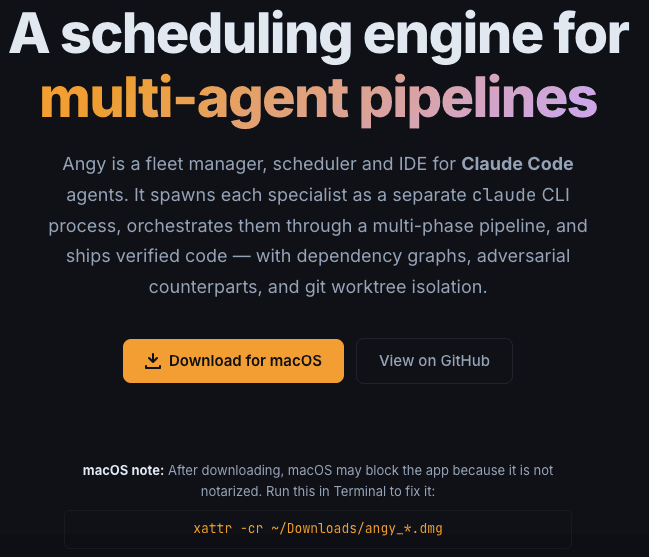
Angy is the orchestration layer for autonomous software engineering. It addresses the core bottleneck where single-pass AI code generation fails to produce functional end-to-end systems due to integration errors and architectural drift. Here are specific personas who benefit most:
- Full-Stack Developers who need to build complex features across multiple subsystems without manual integration fixes.
- Software Architects looking to automate the implementation of high-level specifications while maintaining strict verification gates.
- DevOps Engineers requiring parallelized, isolated environments for AI-driven code generation to prevent repository locking.
The Engine: How the "Secret Sauce" Works
AI Technology: Agentic.
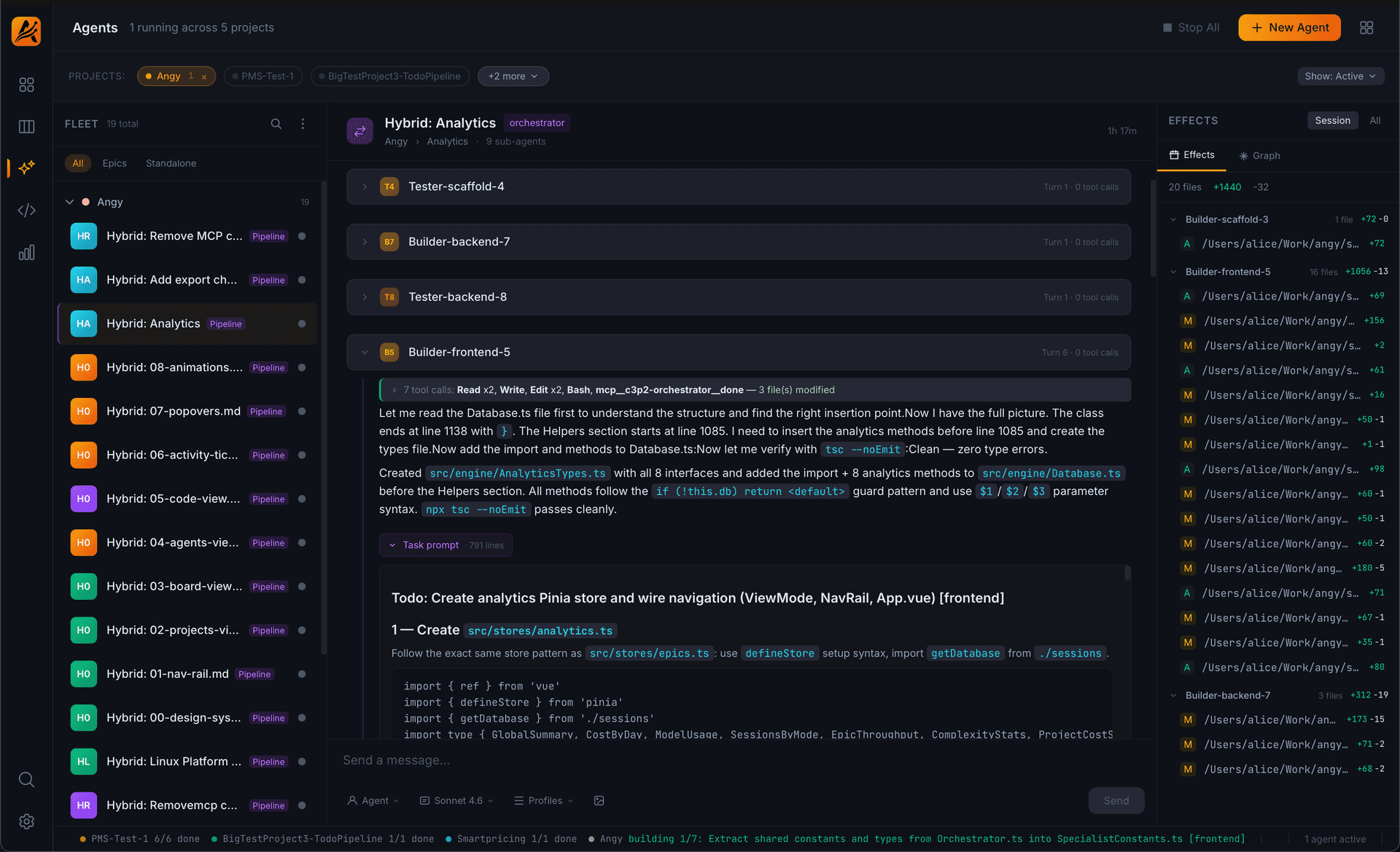
Input-Output Loop: The user provides a high-level specification or "Epic." Angy spawns multiple Claude Code CLI processes that interact through a coded state machine to output verified, tested code directly into isolated Git worktrees.
Innovation highlights:
- Deterministic PipelineRunner: A TypeScript state machine that drives the build process through Plan, Incremental Build, and Review phases, ensuring the LLM does not decide the workflow logic.
- Adversarial Counterparts: A persistent "skeptic" agent that independently verifies plans and audits code, blocking approval until all claims are validated.
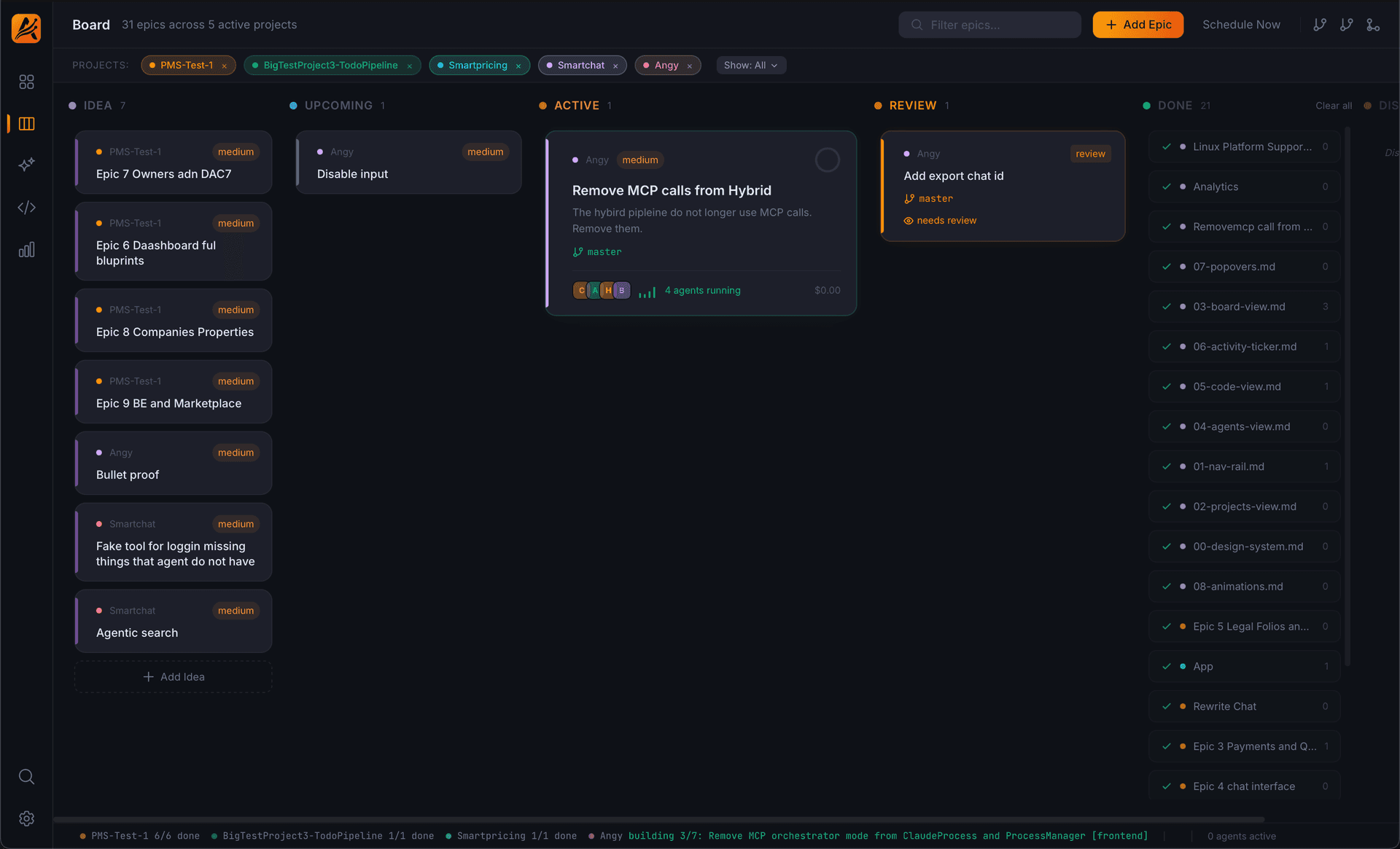
- Git Worktree Isolation: Parallel execution of multiple epics on the same repository by creating dedicated working directories, bypassing standard repository locks.
The Toolkit: Capabilities & Connectivity
Flagship Features:
- Autonomous Scheduler: A background engine that prioritizes and dispatches epics based on dependency depth, API cost budgets, and priority scoring.
- Live Observability: Real-time token streaming, Xterm.js terminal integration, and a visual tool/file graph to monitor agent decisions as they happen.
Integrations: Claude Code CLI, Git, macOS, Tauri, and GitHub.
The Proof: Market Trust
Status: Open Source (Apache License 2.0).
- Benchmark Performance: Successfully implemented a complex full-stack spec (12 tables, 25+ API endpoints) with zero manual code fixes.
- Reliability: Outperformed standard AI coding tools in "docker compose up" benchmarks for end-to-end functionality.
- Version: Currently at v0.3.1 with active development on GitHub.
The Full Picture: Value & Realism
| Pros | Cons |
|---|---|
| High reliability through multi-phase adversarial verification. | Initial setup friction on macOS due to notarization requirements. |
| True parallel execution using Git worktrees. | Dependent on external Claude Code CLI and API availability. |
Pricing
- Open Source: Free to self-host and modify under Apache License 2.0.
- API Costs: Users manage their own Claude API usage and costs.
- Enterprise: Not applicable (Community-driven).
Frequently Asked Questions
Q1: How does Angy handle complex dependencies?
A: It uses a Directed Acyclic Graph (DAG) to manage dependsOn and runAfter chains, ensuring prerequisites are met before dispatching successors.
Q2: Can I use it on Windows or Linux?
A: The current documentation focuses on macOS support, though as a Tauri/TypeScript application, cross-platform potential exists with manual configuration.
Q3: Does it require a specific LLM?
A: Yes, it is specifically designed to wrap and orchestrate the Claude Code CLI.